
IDEA StatiCa

Overview
IDEA StatiCa is a structural engineering software suite for the design and code-check of steel connections, reinforced concrete details, cross-sections, and beams. At its core is the patented Component-Based Finite Element Method (CBFEM) - a technology that computes real stress-strain behavior in plates, bolts, and welds under actual loading, covering connection geometries that fall outside the applicability limits of standard code tables. Code-check reports referencing Eurocode, AISC, CISC, AS, IS, GB, HKG, and SP are generated automatically and are ready for direct design submission.
Products

IDEA StatiCa Steel
Comprehensive application for design and code-check of steel connections of any topology - bolted, welded, or mixed. Covers base plates, moment frames, and steel-to-concrete anchoring. Performs stress-strain analysis, stiffness classification (pinned / semi-rigid / rigid), local buckling, seismic capacity design, fire resistance, and fatigue checks per AISC, Eurocode, CISC, AS, IS, GB, HKG, and SP. Parametric templates and a Connection Library with 1M+ real-world joints accelerate standard connection design. Reports with geometry, utilization ratios, and fabrication sketches are generated in three clicks.

IDEA StatiCa Concrete
Unified solution covering reinforced and prestressed concrete design across three modules: Detail (D-regions - walls, corbels, dapped ends, frame joints, diaphragms, and openings using the CSFM method), RCS (cross-section and beam design with interaction checks for combined normal force, shear, bending, and torsion at ULS and SLS), and Member (individual member capacity and non-linear behavior). All ULS and SLS verifications - including crack width, deflection, and prestressing effects - are produced in a single analysis run per EN, ACI, and other supported standards.
Key Features
CBFEM Analysis Engine
The patented Component-Based Finite Element Method models every plate, bolt, weld, and anchor as a finite element. Stress and strain distribution is computed under realistic loading, enabling analysis of geometrically complex joints that exceed the applicability range of standard code tables - replacing conservative hand calculation approximations with rigorous numerical results.
Multi-Code Compliance
Automated code-check across Eurocode (EN 1993, EN 1992), AISC 360, CISC, AS 4100, IS 800, GB 50017, HKG, and SP standards. Each check references the applicable clause in the output report. Seismic provisions (AISC 341, EN 1998) and fire resistance analysis per EN 1993-1-2 are handled without manual load combination setup.
BIM and FEA Integration via Checkbot
Live bidirectional data exchange with Revit, Advance Steel, Robot Structural Analysis, Tekla Structures, SAP2000, ETABS, SCIA Engineer, RFEM, STAAD.Pro, and 30+ additional platforms. Member geometry, sections, materials, and load combinations import automatically. Model changes in the FEA tool propagate to IDEA StatiCa without manual re-entry, reducing connection design time by up to 80%.
Automated Code-Check Reports
Full verification reports generated in three clicks and ready for client submission or regulatory approval. Each report contains connection geometry, loading summary, FEA results with stress and strain visualizations, utilization ratios keyed to code clauses, bill of materials, and fabrication sketches. Report content and structure are fully customizable.
Stiffness, Stability, and Seismic Checks
Joint stiffness is computed and classified as pinned, semi-rigid, or rigid per Eurocode and AISC for accurate input to global frame models. Local plate buckling analysis identifies instability modes under design loads. Seismic capacity design verifications per AISC 341 and EN 1998 compute connection overstrength and ductility requirements for dissipative zones.
Connection Library with 1M+ Joints
A cloud database of over one million real-world connection configurations from completed projects globally. Parametric templates for standard simple connections reduce modeling clicks by up to 80%. Engineers search by connection type, code standard, or geometry, adapt the template to project parameters, and run a full code-check without building the model from scratch.
Benefits
- ✓Analyzes connections beyond the applicability limits of standard code formulas. The CBFEM finite element approach covers any connection geometry and loading condition, including spatial nodes with multiple members, mixed bolted-welded assemblies, irregular plate configurations, and connections in seismic zones - situations where code tables either do not apply or require conservative approximations that lead to over-design.
- ✓Reduces connection design time by up to 80% through BIM workflow integration. Checkbot imports member geometry, cross-sections, materials, and load combinations directly from the engineer's existing FEA model (Robot, SAP2000, ETABS, RFEM, and others). Re-modeling connections from scratch is eliminated, and any model update in the FEA tool is synchronized to IDEA StatiCa automatically without manual re-entry.
- ✓Delivers submission-ready reports directly from the design environment. Verification reports are generated automatically with three clicks and contain all required content: geometry, loading, FEA results, utilization ratios keyed to code clauses, connection sketches, and bill of materials. Reports are formatted for direct submission to clients or authorities without additional preparation.
- ✓Enables material optimization that reduces structural steel consumption. Because CBFEM computes actual stress distribution rather than worst-case conservative assumptions, engineers identify over-designed stiffeners, excessive weld sizes, and redundant bolt rows. Documented case studies show stiffener thickness reduced by half after accurate analysis replaced conservative hand-calculation estimates on complex nodes.
- ✓Provides a single platform for steel connections and concrete detail design. The Steel (Connection, Member), Detail (RC D-regions), and RCS (cross-sections and beams) modules operate within a unified environment sharing the same project file, license, and reporting framework. Teams handling mixed steel-concrete structures manage both material types without switching between separate specialist tools.
Editions and Subscription Terms
IDEA StatiCa is available as a set of individual application licenses (Steel, Detail, Concrete/RCS, Member) and as bundle products (Complete, Enterprise). All standard licenses are sold as subscriptions with 12-month and 36-month terms. The 36-month subscription provides a reduced effective annual rate compared to annual renewal. Subscription pricing includes maintenance - access to all major and minor releases issued during the subscription period - at no additional cost. Perpetual licenses are available in some markets and require a separate annual maintenance fee to retain access to new versions.
License Types
Standard (Floating Seat)
Account-based floating license with up to 7 named users per purchased seat. Available as a 12-month subscription (annual renewal) or a 36-month subscription at a lower effective annual cost. Engineers access the license from any device using their credentials - no machine binding or VPN required. Switching devices and returning seats to the shared pool is unrestricted. Maintenance is included in the subscription price.
Perpetual + Maintenance
One-time purchase of a perpetual license for the version current at the time of purchase. Annual maintenance must be purchased separately to retain access to new major and minor releases. If maintenance lapses, the customer retains access to the version at the time of lapse but must purchase catch-up maintenance for all missed periods before upgrading to a current version. Suitable for organizations with multi-year budget cycles and controlled upgrade schedules.
Enterprise (Unlimited Users)
Multi-year contract package providing the full IDEA StatiCa Complete feature set with unlimited named users per seat and no single-country usage restriction. Enterprise licenses enable multinational teams to share a single license pool across offices in different countries - not permitted under standard licenses. Includes structured onboarding, training, robot-based workflow automation, and dedicated account management. Cannot be combined with standard-tier seats.
Supported Platforms
Industry Applications
| # | Industry / Role | Application Scenario |
|---|---|---|
| 1 | Structural Engineering Firms | Design and code-check of steel connections in commercial and industrial buildings - beam-to-column, column base plates, moment frames, and bracing connections. Import internal forces directly from Robot, ETABS, or SAP2000 via Checkbot, run CBFEM analysis, and deliver submission-ready reports in a fraction of the time required by hand calculation or conservative template methods. |
| 2 | Steel Fabricators and Detailers | Verify connection designs received from EOR (engineer-of-record) before fabrication. Use the free Checkbot version to import the structural model and check all connections in bulk. Identify over-designed stiffeners or undersized welds early in the production cycle. Generate fabrication sketches and bills of material automatically from the IDEA StatiCa project. |
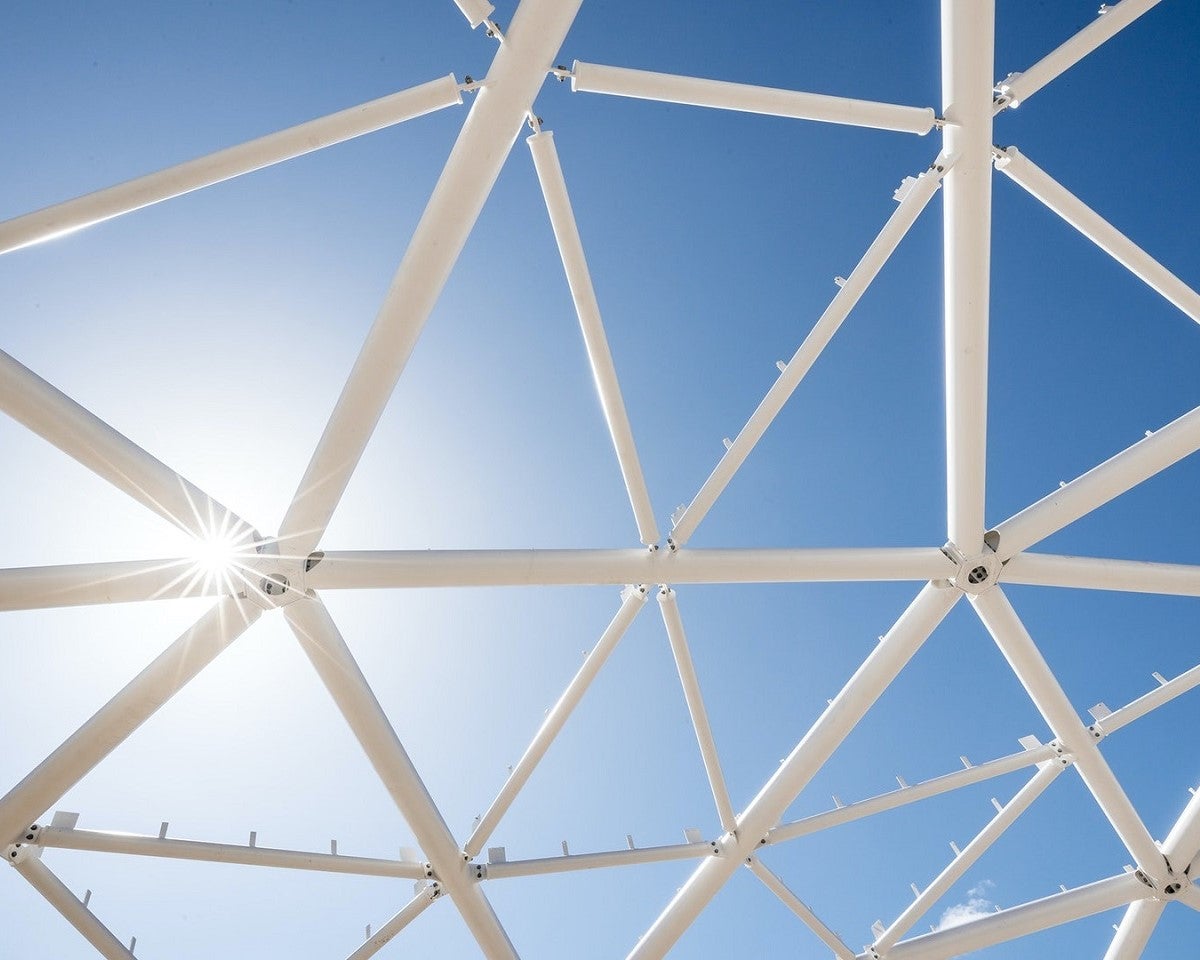
| 3 | Infrastructure and Bridge Engineering | Analyze complex steel truss nodes and bridge girder connections where member geometry exceeds the limits of standard AISC or Eurocode table-based methods. Apply fatigue checks for bridges under live load spectra. Design non-standard connection geometries - including multi-member spatial nodes such as those at the Queen's Wharf Skydeck - where conventional formulas are inapplicable. |
| 4 | Reinforced Concrete Design | Design concrete D-regions including walls with openings, corbels, dapped-end beams, and transfer slabs using the CSFM method in IDEA StatiCa Detail. Visualize actual reinforcement stress utilization and concrete strut behavior. Obtain all ULS and SLS verifications - including crack widths and deflections - in a single analysis run rather than performing separate hand calculations for each check type. |
| 5 | High-Rise and Complex Architecture | Handle non-standard steel connection geometries common in landmark and high-rise projects: inclined columns, offset beam connections, moment connections in seismic zones, and hybrid steel-timber nodes. CBFEM analysis is not constrained by code table geometry limits, enabling safe design of connections that fall outside the prescriptive method's scope - as demonstrated on projects including 10 Fenchurch Avenue and The Twist Museum in Norway. |
Case Studies



Summary
IDEA StatiCa fills the gap between global FEA platforms and actual connection design: it takes what structural analysis software models as an idealized node and produces a rigorous, code-checked verification of every plate, bolt, and weld. The patented CBFEM engine covers geometries that exceed standard code table limits, across Eurocode, AISC, CISC, AS, IS, and other standards. With 40,000+ engineers in 80 countries and over 1.5 million calculations per month, the platform is a recognized industry standard rather than a supplementary tool.
For procurement teams, the key differentiators are the proprietary CBFEM core (patented, adopted by Hilti for PROFIS Engineering Suite), deep multi-code coverage in a single environment, and a cloud-based floating license model with no machine binding. The fully functional 14-day trial allows direct evaluation on live projects. The Enterprise tier addresses multinational firms requiring cross-country license pooling and API-level automation.